
-
ProSpecPy: Processing FTIR Spectroscopy Data
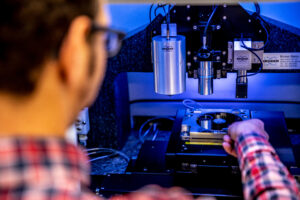
Partner: Elizabeth Phillips SSEC Engineer: Anshul Tambay, Anuradha Ramachandran, and Eric Xue Research Goals and Domain Hydrogenases are a group of enzymes that catalyze the reversible reduction of protons to hydrogen. They are extremely efficient, with turnover frequencies that rival the most efficient metal catalysts (Pt or Pd), using earth abundant metals (Ni or Fe)…
-
Announcing the 2024 Data Science Incubator Projects
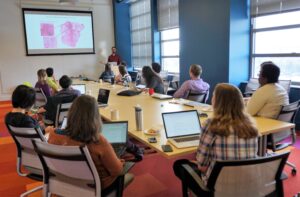
The eScience’s annual Data Science 2024 Incubator program kicked off last week, which enables new research discoveries by bringing together data scientists and domain scientists to work on focused, intensive, collaborative projects. Our team of data scientists provide expertise in state-of-the-art technology and methods in large-scale data manipulation and analytics, cloud and cluster computing, statistics…
-
Assessing Influences of Wildfires on Park Visitation Patterns Using Gravity
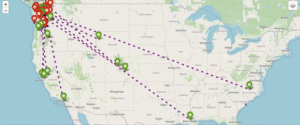
Project Lead: Nino Migineishvili, UW Computer Science and Engineering Data Science Lead: Spencer Wood Wildfires have been growing in size, duration, and destructivity, resulting in more decisive calls to improve forest health and protect communities. Wildfire fuel treatments – which involve reducing or removing vegetation from fire-prone areas – are one strategy for reducing wildfire risk. Where…
-
Polygenic and Contextual Determinants of Alzheimer’s Disease and Related Dementias
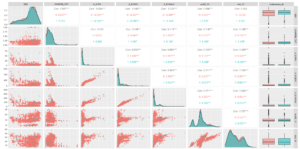
Project Lead: Diane Xue, Institute for Public Health Genetics Data Science Lead: Bryna Hazelton One in three people over the age of 65 dies with dementia. The most common cause of dementia is Alzheimer’s disease (AD), a progressive neurodegenerative disorder influenced by genetic and environmental factors. Dozens of genetic loci have been linked to AD and related…
-
Illuminating the role of cold-pools in structuring shallow convection
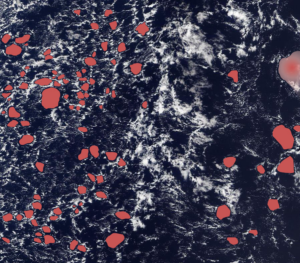
Project Lead: Hauke Schulz, Cooperative Institute for Climate, Ocean, and Ecosystem Studies (CICOES) Data Science Lead: Bernease Herman Shallow convection, like the stratocumulus decks off the Washington coast, is responsible for a large portion of the uncertainty in climate projections, thus a better understanding of their processes is crucial. Advances in computational resources allow for ever increasing…
-
What do the leaders say? Analysis of the United Nations General Debate Corpus
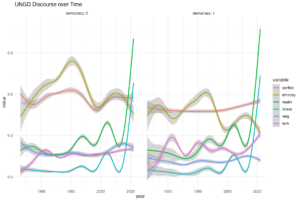
Project Lead: Jihyeon Bae, Ph.D. Candidate, Political Science Data Science Lead: Valentina Staneva Every year, more than 200 state representatives open the United Nations General Assembly meeting with statements during the General Debate (UNGD). The UNGD speech floor provides a rare opportunity for all states to equally have their voices heard by a wide range of audiences.…
-
Investigating germline genetic influence on somatic immune traits in non-cancerous tissues
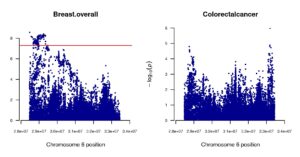
Project Lead: Tabitha Harrison, UW Epidemiology Faculty Advisor: Sara Lindström, Epidemiology Data Science Lead: Vaughn Iverson Cancer is a significant health burden in the US, causing substantial morbidity and mortality. This research project builds on past studies demonstrating that inherited genetic variants can influence how our immune system affects cancer risk and survival. While prior work has linked…
-
Characterizing glacial lake outburst flood hazard at a regional scale using fused InSAR-speckle tracking surface displacement time series
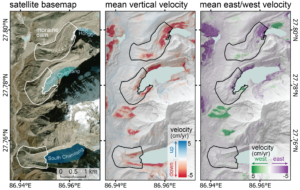
Project Lead: George Brencher, UW Civil & Environmental Engineering Data Science Lead: Scott Henderson Glacial lakes are distributed in alpine terrain worldwide and are frequently dammed by unstable glacial moraines. These moraine dams can fail, causing lakes to rapidly drain and flood downstream valleys. Glacial lake outburst floods (GLOFs) are a significant hazard for high-elevation infrastructure and…
-
Announcing 2023 Seed Grants for AI Projects

The eScience Institute has partnered with the UW Office of Research, the Paul G. Allen School of Computer Science & Engineering, the Information School, and the NSF Institute for Foundations of Data Science (IFDS) to award seed grants to help initiate and support novel collaborations on four projects: Revealing the Hidden Lives of Cryptic Carnivores…
-
UW Receives Honors in 2023 HPCwire Readers’ and Editors’ Choice Awards
The University of Washington and our CloudBank partners at the San Diego Supercomputing Center and UC Berkeley have been recognized in the 20th Anniversary edition of the HPCwire Readers’ Choice Awards, presented at the 2023 International Conference for High Performance Computing, Networking, Storage, and Analysis (SC23), in Denver, Colorado. The list of winners was revealed…