
-
Staff Spotlight: Bryna Hazelton
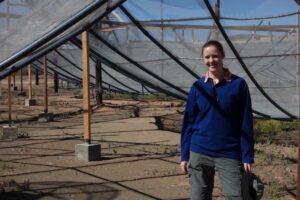
By Kate Rich The eScience Staff Spotlight is a series featuring individual members of our team and their career journey. This week’s featured staff member is Bryna Hazelton, our Director of Research Programs and Senior Research Scientist. Given her upbringing, some might find it unsurprising that Bryna developed a passion for research. She grew up…
-
BioEthics: Lay Summaries for Research Participants

Partner: Kate MacDuffie SSEC Engineers: Niki Burggraff, Apoorva Sheera, and Ying-Hsiang Huang Research Goals and Domain The Bioethics Team from the University of Washington Institute of Translational Health Sciences (ITHS) consults researchers and personnel on how to ethically engage with research participants and human subjects who inquire about their research studies. Researchers who conduct human…
-
How Busy are National Parks and other Public Lands? Researchers Hone Methods for Estimating Visitation

By Kate Rich Visits to national parks are on the rise. In 2024, the National Park Service set a new record of 332 million recreation visits, with over 6 million more visitors than the previous year. While these numbers indicate growing interest in outdoor recreation, climbing visitation rates present challenges for land managers working to…
-
Improving Data Quality in Eviction Research

Project Lead: Will von Geldern, UW Public Policy & Governance Data Science Lead: Curtis Atkisson Evictions cause many harmful impacts on housing-insecure households and low-income communities. Most sociological and policy research has used two measures of evictions (filings and judgments) to identify and measure the consequences of the modern eviction crisis. This study will help advance what…
-
$20 Million Grant to Provide Commercial Cloud Resources to National Research Community

by Cynthia Dillon, SDSC Communications The University of Washington will partner on a $20 million grant from the U.S. National Science Foundation (NSF) for the acquisition and deployment of commercial cloud resources to support approximately 500 research projects annually across the nation over the next five years. CloudBank 2: Accelerating Science and Engineering Research in the…
-
The Use of Machine Learning to Predict Hospital Readmissions After Lower Limb Amputation in the Medicare Population
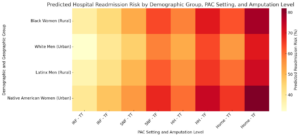
Project Lead: Rachael Rosen, UW Medicine Data Science Lead: Valentina Staneva Lower limb amputation (LLA) is a significant health event that is often an indicator for worsening chronic disease and increased risk of further health decline—especially among older adults. After amputation, recovery depends not only on medical care but also on access to supportive post-acute care services,…
-
A web-based interface for rare disease lumping and splitting predictions with LumpIt

Project Lead: Shirin Khanam, Jessica Chong, and Allison Marcello, UW Pediatrics Data Science Lead: Bernease Herman Rare genetic disorders affect 263-446 million persons or ~3.5–5.9% of the worldwide population, and the vast majority of these persons have a Mendelian condition (MC). Over 4,500 genes underlie one or more of the 6,000 MCs described to date, and…
-
Deep Learning to Uncover Watershed Specific Characteristics in Salmon Otolith Patterns to Aid in Management of Pacific Salmon

Project Lead: Ben Makhlouf and Daniel Schindler, UW Aquatic and Fisheries Sciences Data Science Lead: Valentina Staneva Pacific salmon are vital to Alaskan communities, serving as a key cultural, subsistence, and economic resource. However, Chinook salmon populations in Western Alaska have declined sharply in recent years, particularly in the Yukon, Kuskokwim, and Nushagak River basins. While many…
-
Detection of Early Warning Signals regarding Safety Concerns of Implantable Medical Devices

Project Lead: Aparna Ramanathan, UW Medicine Data Science Lead: June Yang, Spencer Wood Currently in the United States, postmarket surveillance of medical device safety is conducted via the Manufacturer and User Facility and Device Experience (MAUDE) database. MAUDE is targeted at device manufacturers and does not engage patient or provider users of new medical devices; this lack…
-
Global High-Resolution Modeling: A New Lens on the Southern Ocean
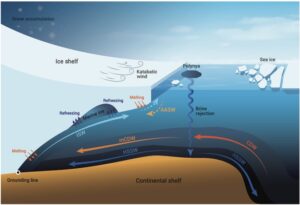
Project Lead: Mira Berdahl, UW Earth and Space Sciences Data Science Lead: Scott Henderson Modern Antarctic ice loss is largely driven by warm, dense circumpolar deep water (CDW), which reaches the ice sheet margin and causes ice to melt. Antarctic mass loss has significant implications for global sea level rise, but the mechanisms that transport CDW to…