
Category: Incubator Project
-
Characterizing glacial lake outburst flood hazard at a regional scale using fused InSAR-speckle tracking surface displacement time series
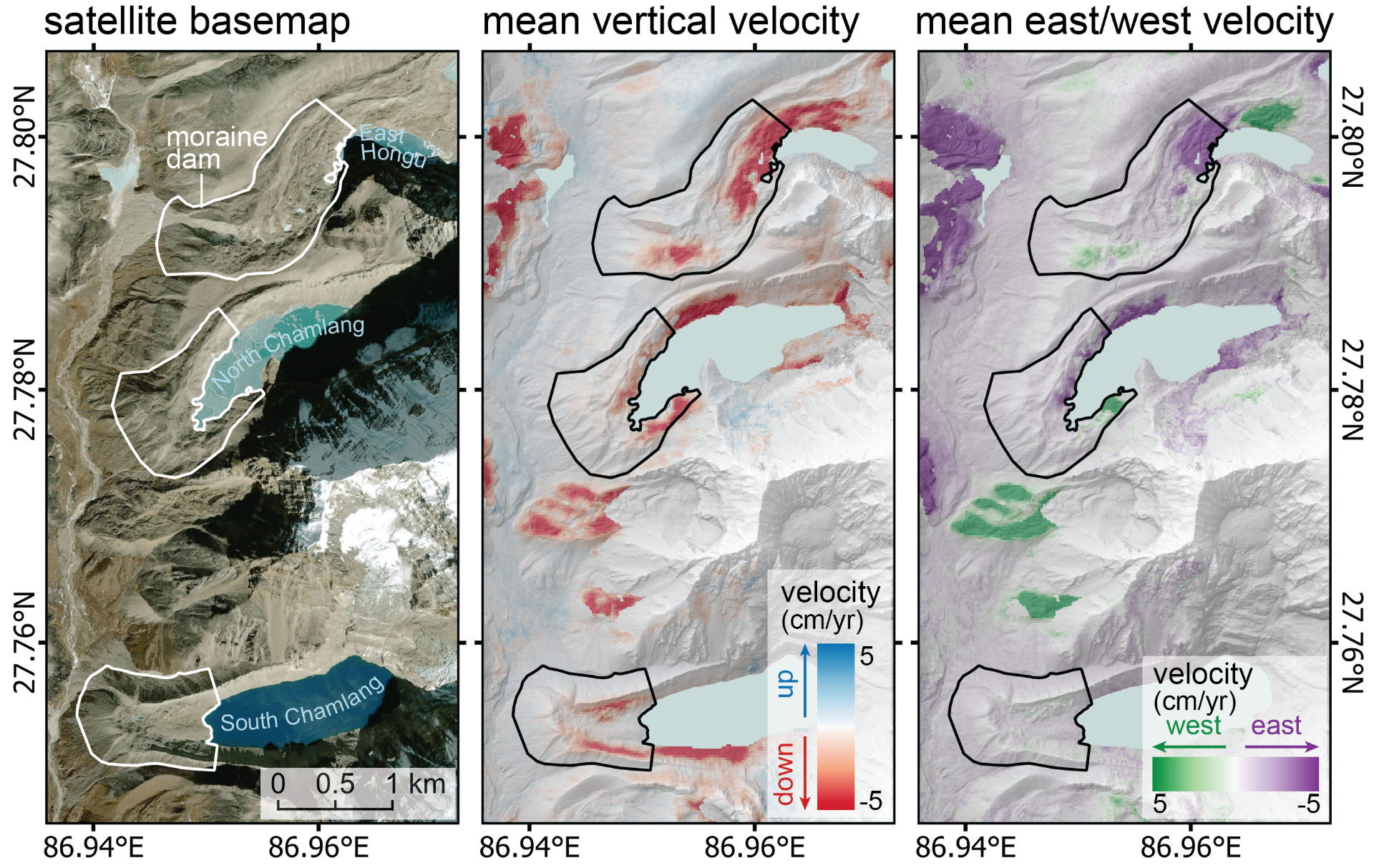
Project Lead: George Brencher, UW Civil & Environmental Engineering Data Science Lead: Scott Henderson Glacial lakes are distributed in alpine terrain worldwide and are frequently dammed by unstable glacial moraines. These moraine dams can fail, causing lakes to rapidly drain and flood downstream valleys. Glacial lake outburst floods (GLOFs) are a significant hazard for high-elevation infrastructure and…
-
Investigating Structure of Social Science Research Datasets for Better ML Evaluation
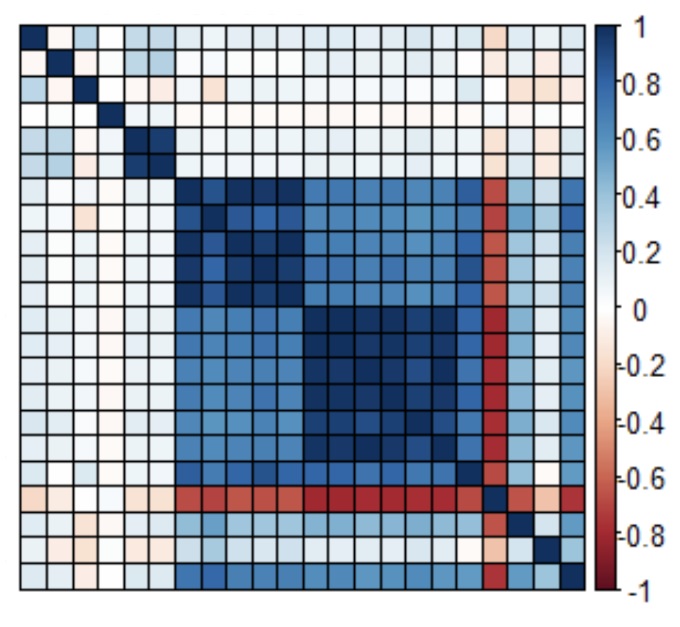
Project Lead: Bernease Herman, eScience Data Scientist Specialized machine learning architectures, such as deep learning, typically rely on inductive biases and other data-specific correlational structure information to produce more effective models. Similarly, the design and evaluation of differentially private synthesizers depends heavily on the correlational structure of the datasets most commonly used in the field. We…
-
Wetland Communities in the US
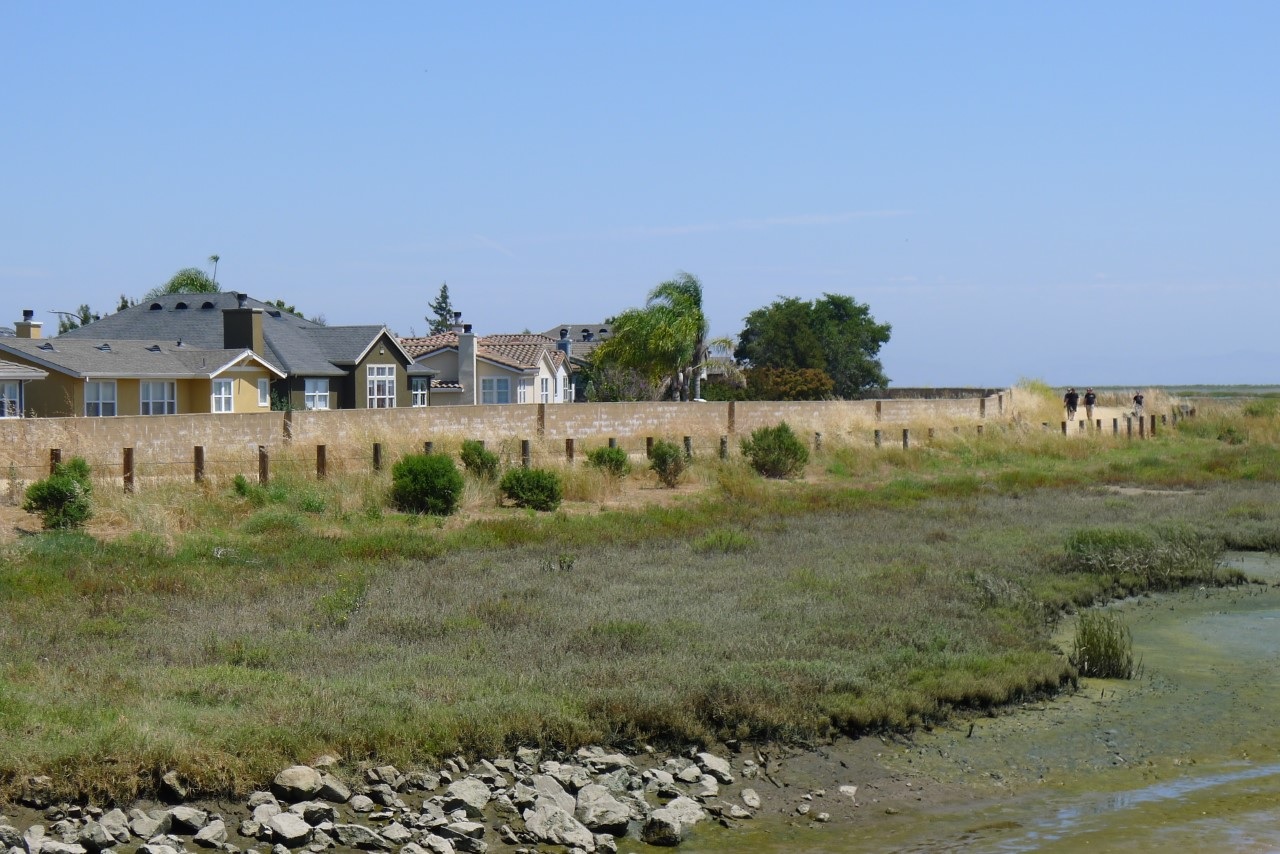
Project Lead: Celina Balderas Guzman, UW Assistant Professor of Landscape Architecture Data Science Lead: Spencer Wood Sea level rise threatens human communities on the coast with a variety of hazards including erosion and flooding. However, these risks are reduced in locations where coastal wetlands provide a natural buffer that absorbs the force of waves created by storms.…
-
Characterizing the spatio-temporal evolution of marine heatwaves
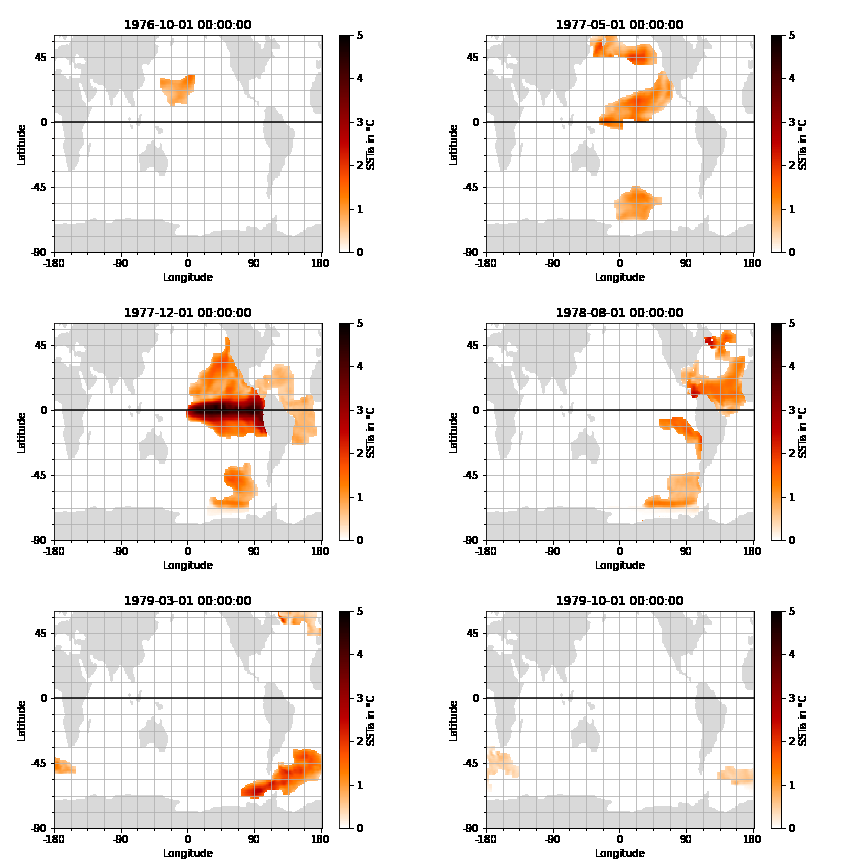
Project Lead: Cassia Cai, UW Oceanography Faculty Advisor: LuAnn Thompson, UW Oceanography Data Science Lead: Valentina Staneva Marine heatwaves (MHWs) are defined as discrete periods when local sea surface temperatures (SST) exceed a temperature threshold (e.g., a seasonally varying temperature threshold). A number of high-profile MHWs, such as the Great Barrier Reef 2002, Mediterranean Sea 2003 and 2006,…
-
The Prototype of a Cloud Store for Distributed Acoustic Sensing Data

Project Lead: Yiyu Ni, Earth and Space Sciences, UW College of the Environment Data Science Leads: Naomi Alterman and Rob Fatland Distributed Acoustic Sensing (DAS) is an emerging seismic observation method that has recently enabled entirely new types of geophysical observation. DAS utilizes repeated laser pulses along optical fibers up to ~100 km in length to measure phase changes…
-
Constructing a robust metric of peak quality for untargeted mass-spectrometry
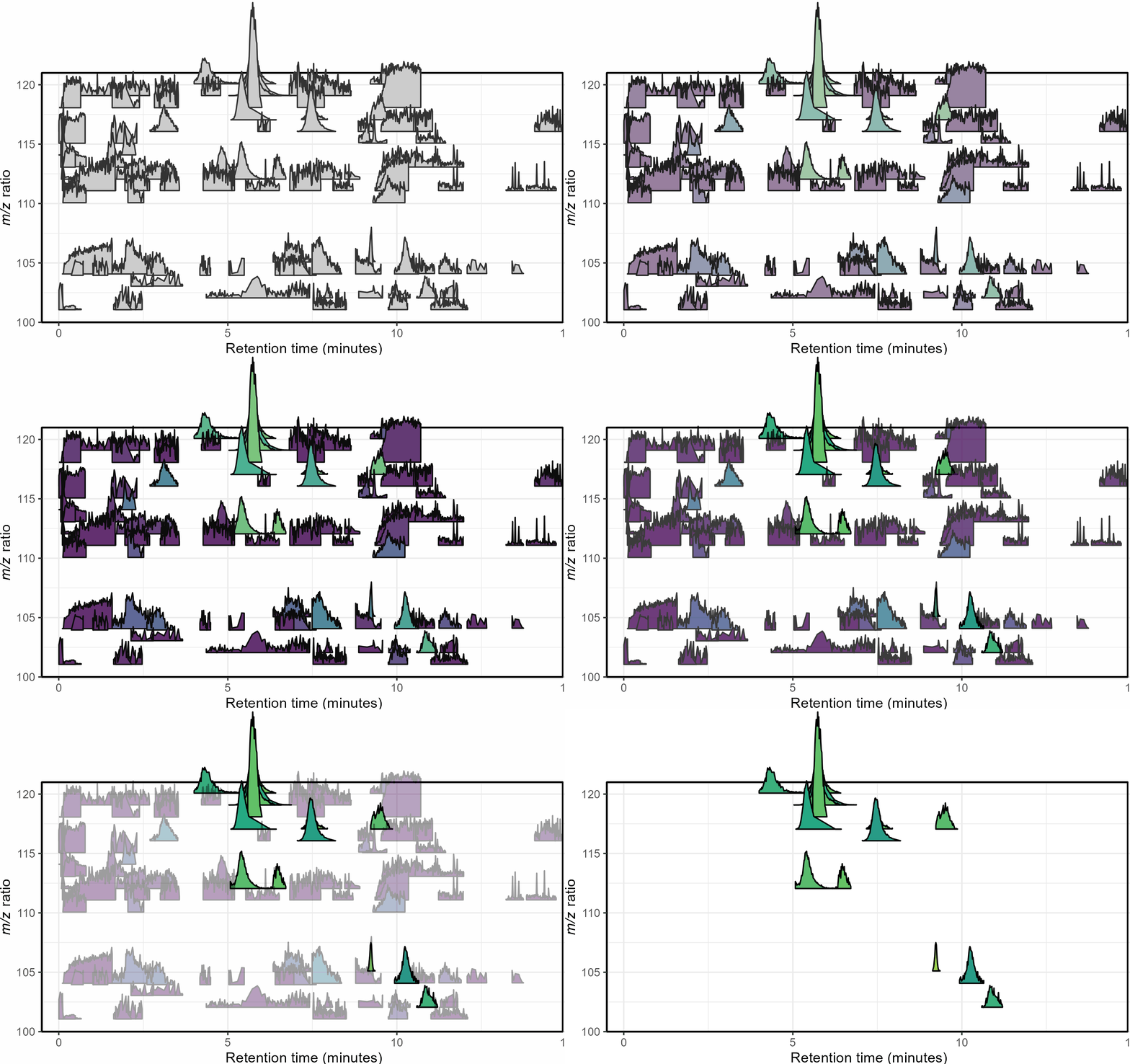
Project Lead: Will Kumler, UW Oceanography Faculty Advisor: Anitra Ingalls, UW Professor of Chemical Oceanography Data Science Lead: Bryna Hazelton Mass spectrometry is a cutting-edge analysis field used to identify the molecular composition of samples taken from medical laboratories, the depths of the ocean, and even outer space. In the Ingalls Lab at UW, we use it to…
-
Leveraging large satellite archives to understand the timing and distribution of global snowmelt
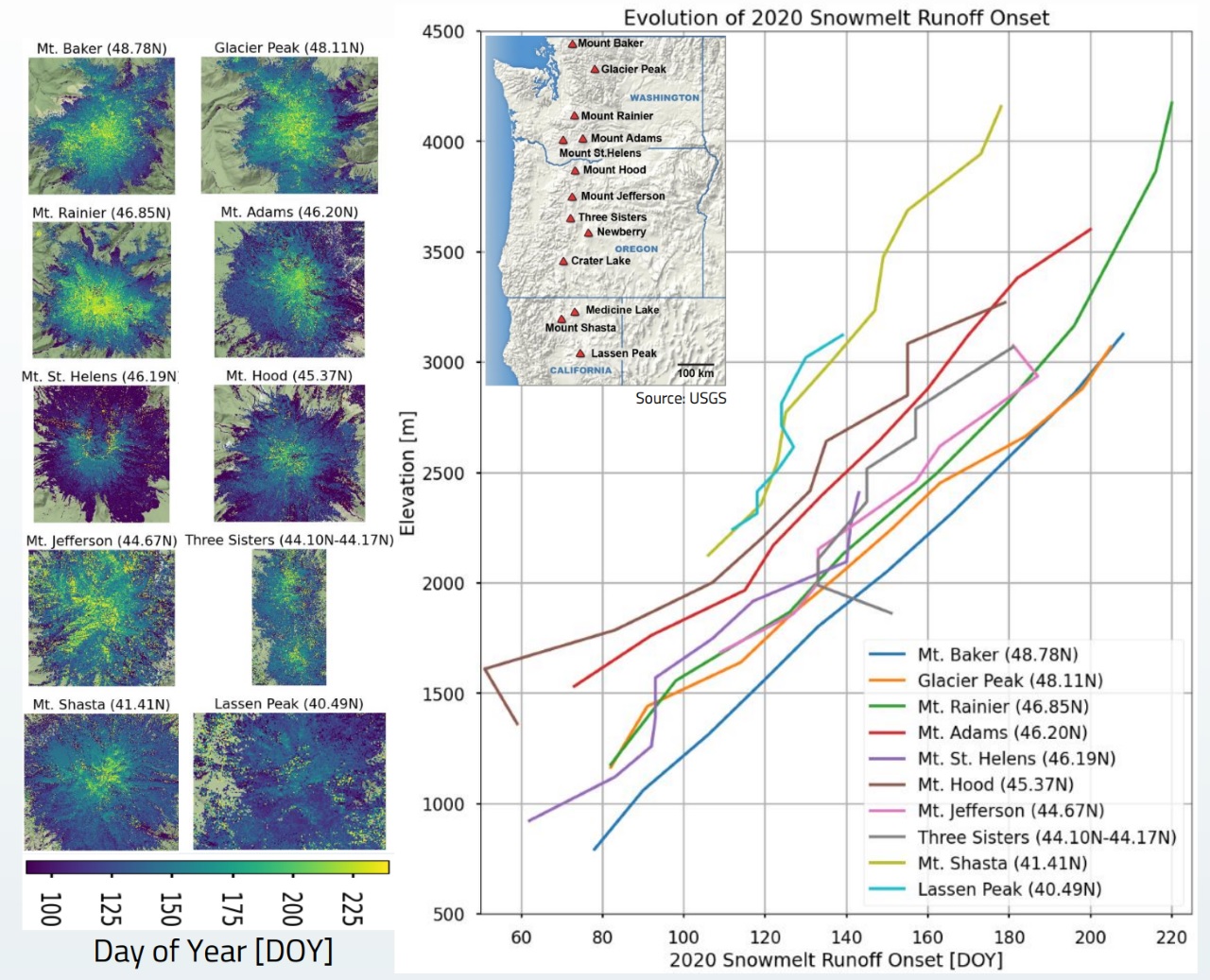
Project Lead: Eric Gagliano, Terrain Analysis and Cryosphere Observation Lab, UW Civil & Environmental Engineering Faculty Advisor: David Shean, UW Civil & Environmental Engineering Data Science Lead: Scott Henderson Seasonal snow plays an essential role in the Earth system and more than 1/6 of the world’s population relies on runoff from seasonal snow and glaciers for agricultural and…
-
Patterns of COVID-19-related mis/disinformation on Twitter: themes of mis/disinformation and data visualizations
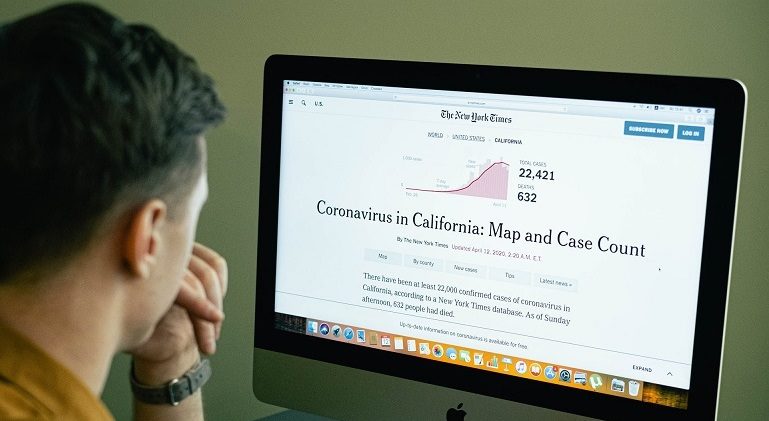
Project Lead: Katie Gonser, Jackson School of International Studies eScience Liaison: Jose Hernandez This project looks at COVID-19-related mis/disinformation in Louisiana and Washington state during the first two surges of the pandemic. Part of a broader collaborative study between social scientists at the University of Washington and computer scientists at Louisiana State University (LSU), this research…
-
Geometry of Color: Connecting spectral topography of the central cone photoreceptor mosaic to functional limits of the human trichromatic visual system
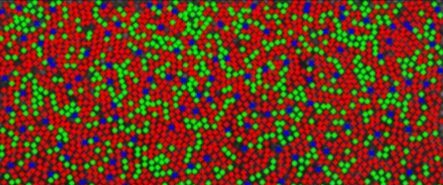
Project Lead: Sierra Schleufer, Neuroscience eScience Liaison: Bryna Hazelton Humans experience remarkable visual acuity among mammals thanks to a retinal mosaic in which cone photoreceptors sensitive to three spans of the visual spectrum are increasingly concentrated toward the central visual field. Our trichromatic vision allows us to discriminate hues along two spectrally opponent axes in addition to…
-
Climate Refuge in Urban Areas: Using Spatial Data to Identify Risk and Benefit Tradeoffs

Project Lead: Rebecca Neumann, Civil & Environmental Engineering eScience Liaison: Spencer Wood and Scott Henderson In Washington State, climate change is causing more frequent summer water shortages, wildfire, flooding, poor air quality, heat-related illnesses, respiratory illnesses, and mental health stress. Socially and economically disadvantaged people are disproportionately impacted by these changes. Given these disproportionate impacts, there is a…