
-
Bernease Herman

Bernease Herman joins the eScience Institute as a Data Scientist. Bernease was most recently a Software Development Engineer at Amazon, where she collaborated with operations research scientists and statisticians to add economic constraints and buying models to Amazon’s Inventory Planning and Control system. Previous to Amazon, Bernease worked on derivatives pricing and predictive modeling at…
-
Bernease Herman receives Mozilla Research Grant
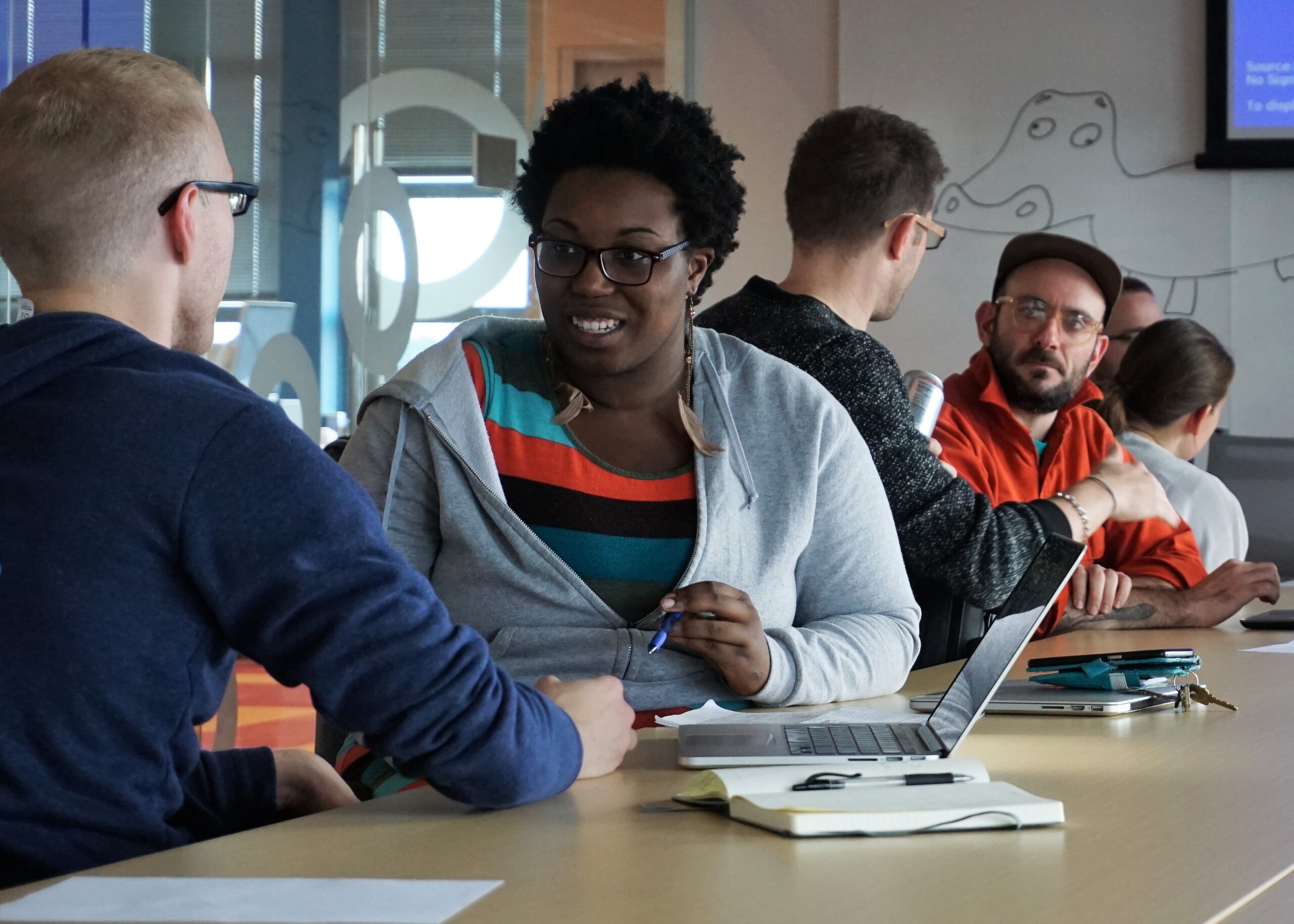
August 6, 2019 Bernease Herman, eScience data scientist, has been awarded a $25,000 Mozilla Research Grant (2019H1) for her project titled “Toward generalizable methods for measuring bias in crowdsourced speech datasets and validation processes.” The project aims to measure dataset bias in the Mozilla Common Voice crowdsourced speech collection process and dataset. Given the goals…
-
Announcing the 2024 Data Science Incubator Projects
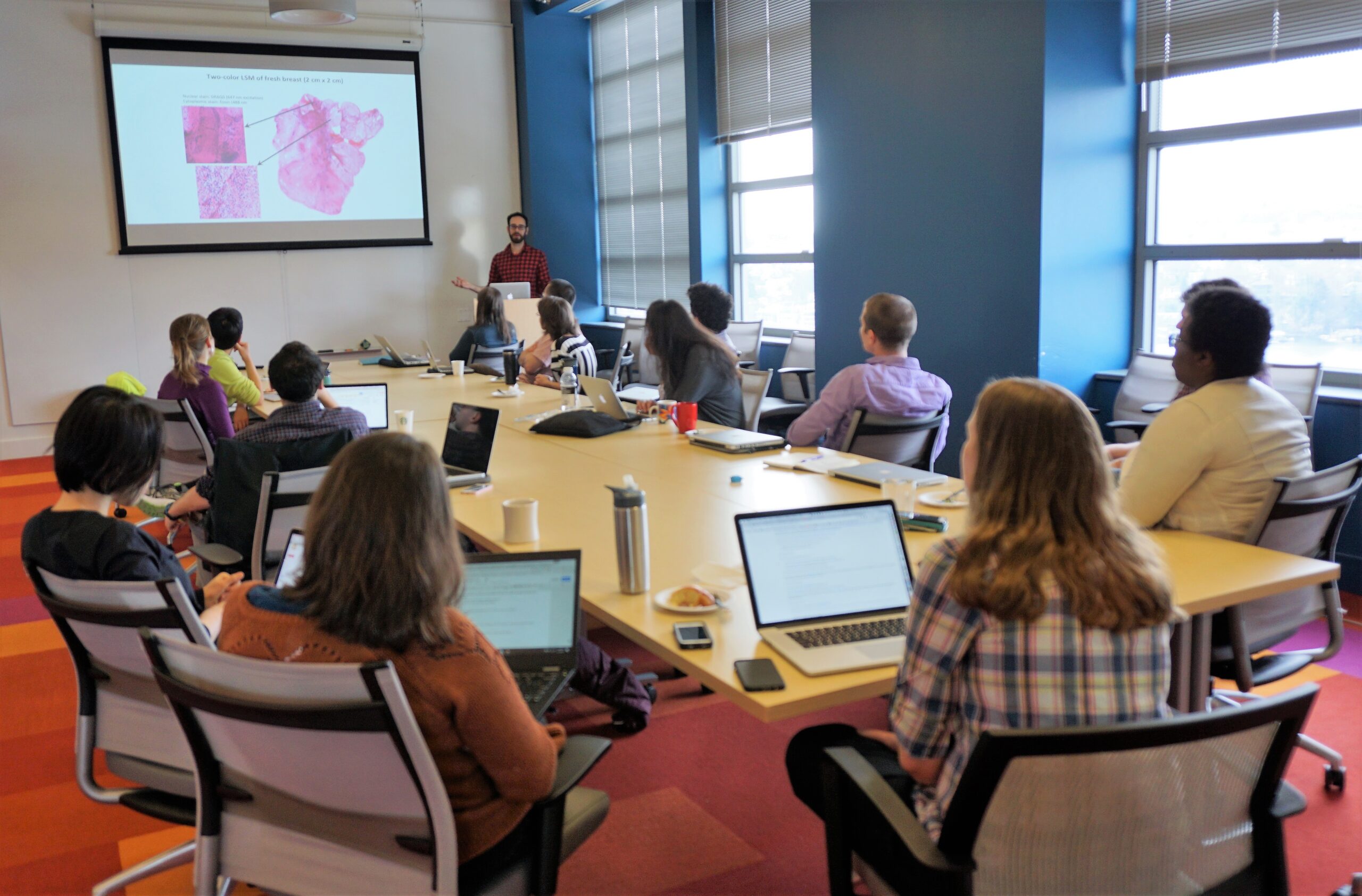
The eScience’s annual Data Science 2024 Incubator program kicked off last week, which enables new research discoveries by bringing together data scientists and domain scientists to work on focused, intensive, collaborative projects. Our team of data scientists provide expertise in state-of-the-art technology and methods in large-scale data manipulation and analytics, cloud and cluster computing, statistics…
-
Illuminating the role of cold-pools in structuring shallow convection
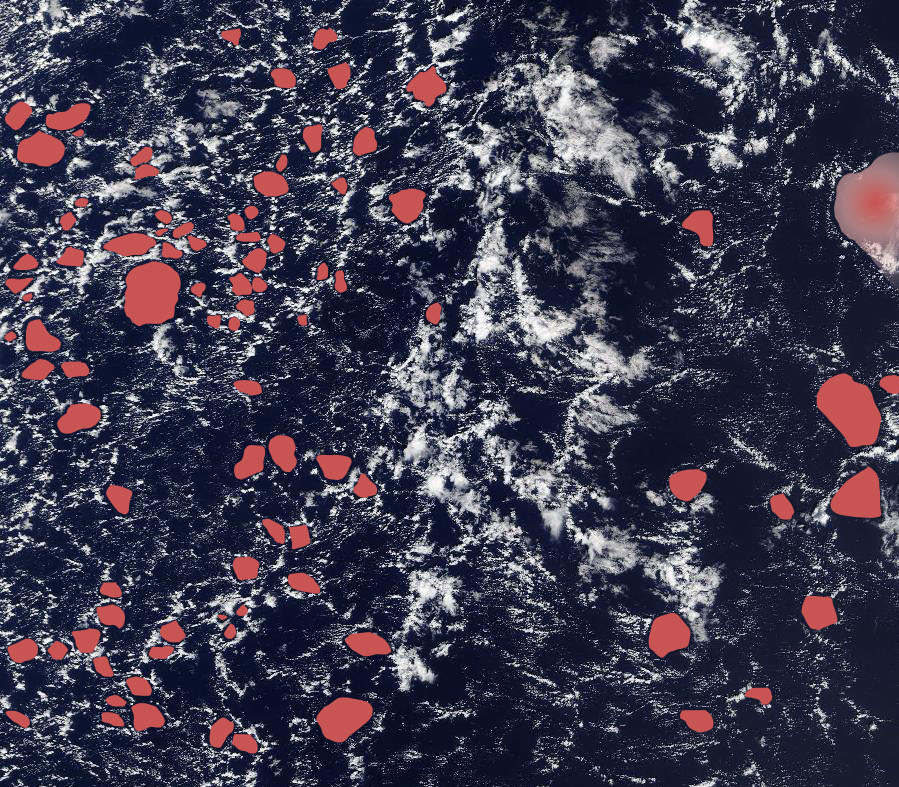
Project Lead: Hauke Schulz, Cooperative Institute for Climate, Ocean, and Ecosystem Studies (CICOES) Data Science Lead: Bernease Herman Shallow convection, like the stratocumulus decks off the Washington coast, is responsible for a large portion of the uncertainty in climate projections, thus a better understanding of their processes is crucial. Advances in computational resources allow for ever increasing…
-
Investigating Structure of Social Science Research Datasets for Better ML Evaluation
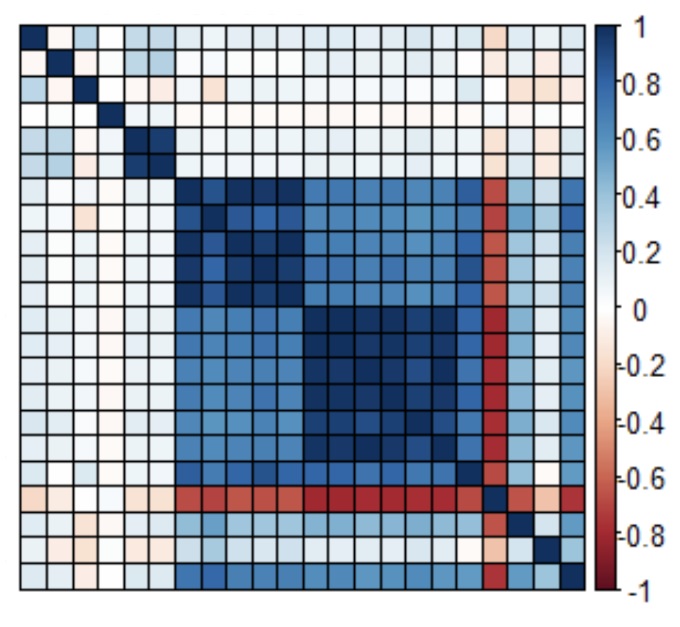
Project Lead: Bernease Herman, eScience Data Scientist Specialized machine learning architectures, such as deep learning, typically rely on inductive biases and other data-specific correlational structure information to produce more effective models. Similarly, the design and evaluation of differentially private synthesizers depends heavily on the correlational structure of the datasets most commonly used in the field. We…
-
Announcing the 2023 Data Science Incubator Projects
The eScience’s annual Data Science Incubator program kicked off last week, which enables new research discoveries by bringing together data scientists and domain scientists to work on focused, intensive, collaborative projects. Our team of data scientists provide expertise in state-of-the-art technology and methods in large-scale data manipulation and analytics, cloud and cluster computing, statistics and…
-
DSSG Participant Alumni
Since eScience launched the DSSG program, we have collaborated with participants from all over the world. Jump to a specific year and see the Student Fellows, Project Leads, Data Scientists, and other participants. 2023 | 2022 | 2021 | 2020 | 2019 | 2018 | 2017 | 2016 | 2015 2023 Alumni Aminat Adefolu Student…
-
UW Data Science Seminar Archives
UW Data Science Seminar Archive Click each quarter to expand the list of seminars and view the recorded presentations. 2024 – Winter January 11: “The Unequal Landscape of Civic Opportunity in America: Evidence from 1.8 Million Tax Returns” with Jae Yeon Kim, Safety Net Innovations Lab January 18: “Mobile sensing with shallow recurrent decoder networks”…
-
Participants
Meet the latest group of DSSG participants from all over the country: Student Fellows and Project Leads. See all the past DSSG participants – click for the full list. DSSG 2023 Student Fellows Aminat Adefolu, Student Fellow Doctoral StudentCollege of Science and Engineering, Central Michigan University Project: Heating Pumps in Alaska and Beyond Full bio…
-
Office Hours

The eScience Institute is pleased to announce data science office hours virtually by appointment Office Hours are an opportunity to bring together expertise from the eScience data scientists, UW libraries, UW-IT, the Center for Statistics and the Social Sciences (CSSS), Amazon Web Services, Google Cloud Platform, MathWorks, and Tableau to help triage your challenges in…