Coding with AI Agents: A Hands-On Workshop for Researchers
Please register for the event at this link: https://luma.com/9nhcdv5t.
AI coding agents represent a significant development in the software engineering landscape, with implications that extend well into scientific research practice. For researchers who develop code as part of their work, developing a rigorous understanding of these tools is becoming increasingly valuable.
This workshop is designed for researchers and research software engineers seeking a substantive, grounded introduction to AI coding agents. The session emphasizes foundational concepts and transferable skills over familiarity with any particular tool or platform, ensuring that the knowledge gained remains applicable as the field continues to advance.
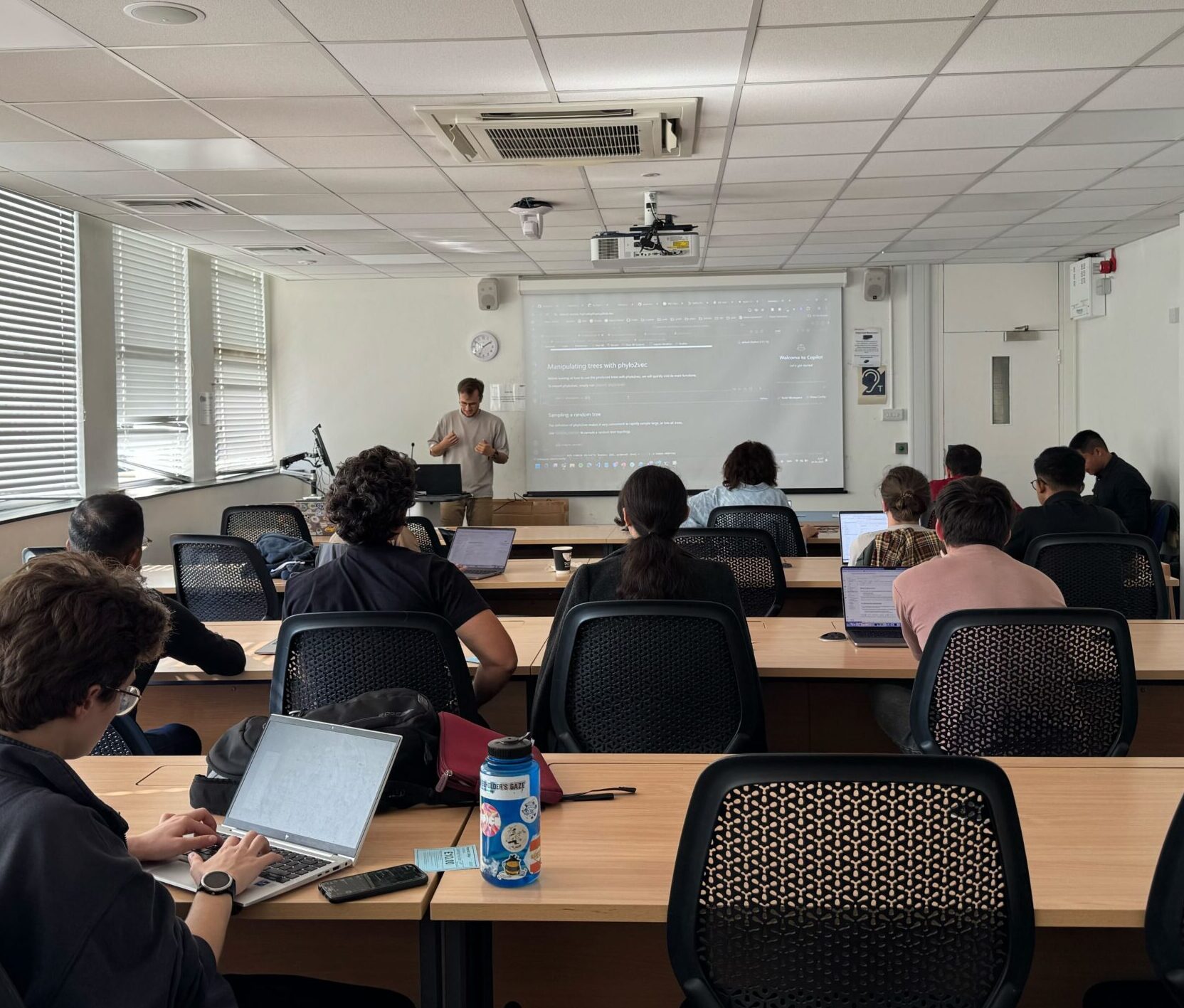
Attendees will survey the current ecosystem of AI coding agents, develop an understanding of how large language models are post-trained to support planning, code generation, and iterative debugging, and observe a structured demonstration of an agent executing a complete research-plan-implement cycle. The workshop concludes with a guided practical exercise in which participants construct a simple skill, with instructional support available throughout.
Learning Outcomes
Upon completing the workshop, participants would be better suited to:
- Articulate how AI coding agents function at a conceptual level
- Evaluate and configure an agent appropriate to their research context
- Identify common limitations and failure modes in agent-assisted development
- Apply agent-based workflows to research software engineering tasks
No prior background in AI or machine learning is assumed. Participants are expected to bring a laptop with Google Chrome installed and a GitHub account.
This workshop offers researchers an opportunity to engage critically with a rapidly evolving area of software development practice, and to leave with both conceptual grounding and direct hands-on experience applicable to their research workflows.
Please register for the event at this link: https://luma.com/9nhcdv5t.
Light breakfast will be provided for registered and checked in attendees. Spots are limited, please register in advance to ensure your place.