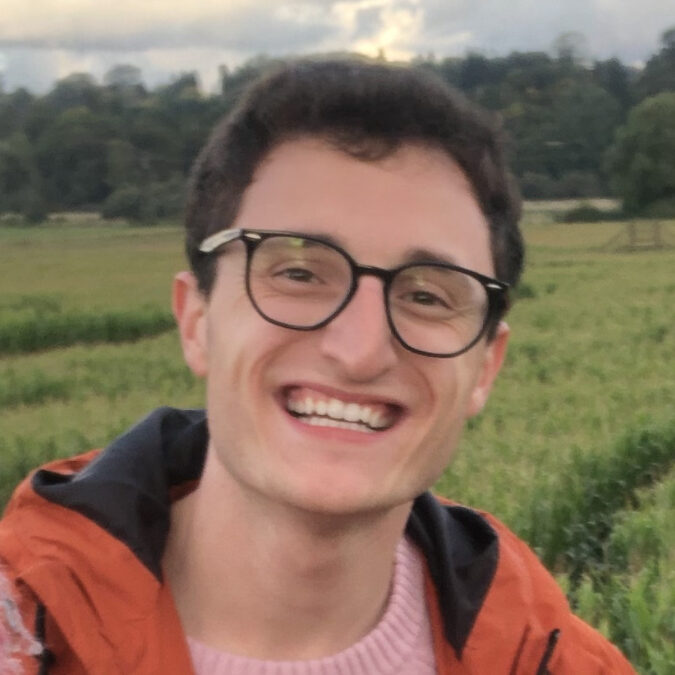
Please join us for a UW Data Science Seminar featuring UW Civil & Environmental Engineering Postdoctoral Scholar Eric Gagliano on Wednesday, May 13th from 4:30 to 5:20 p.m. PT. The seminar will be held in IEB G109.
“Global snowmelt timing insights from over 100 TB of satellite imagery and best practices for large-scale geospatial cloud workflows”
Abstract: Mountain snowmelt is a critical source of freshwater for over one billion people globally, yet the large variability in snowmelt timing across Earth’s diverse mountain regions remains poorly understood due to observational constraints. To address this gap, we processed over 100 TB of satellite radar imagery to produce the first global, high-resolution record of snowmelt runoff onset timing. In this talk, we’ll talk through the creation of this record and share lessons learned and best practices for building large community geospatial datasets. Applied across 150 major mountain ranges, this dataset enables the first comprehensive global analysis of snowmelt timing and its physical controls at high spatial resolution. Results illuminate the influence of topography and climate on snowmelt timing, the capacity of synoptic weather events to shift snowmelt by up to a month across entire regions, and the sensitivity of snowmelt timing to spring air temperatures across diverse mountain environments. As warming continues, understanding these heterogeneous snowmelt timing responses will be essential for anticipating where mountain water resources face the greatest vulnerability.
Speaker Bio: Eric Gagliano is a Postdoctoral Scholar in the Department of Civil & Environmental Engineering at the University of Washington. His research focuses on understanding when and where mountain snowmelt occurs using satellite radar remote sensing and large-scale cloud computing, with applications for water resource management in snow-dominated regions. He completed his Ph.D. in Civil Engineering at UW in 2025 and his B.Sc. in Computational Engineering at The University of Texas at Austin in 2020. Alongside his research, he develops and maintains open-source Python tools to make snow-related geospatial datasets more accessible to the broader community.
The 2025-2026 seminars will be held in person, and are free and open to the public.