
Tag: Data Science for Social Good
-
Staff Spotlight: Anissa Tanweer
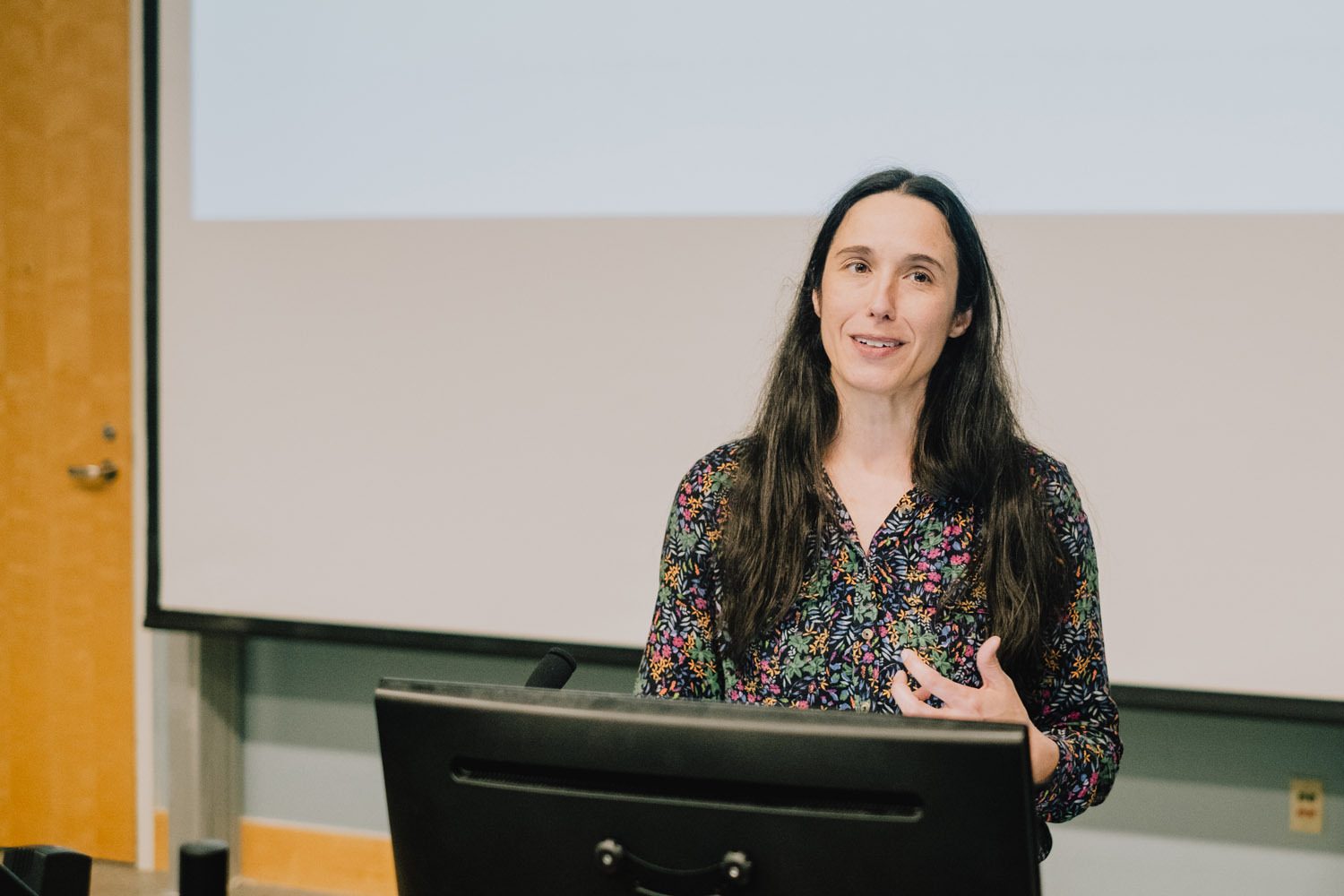
By Kate Rich The eScience Staff Spotlight is a series featuring individual members of our team and their career journey. This week’s featured staff member is Senior Social Scientist Anissa Tanweer. From field site to workplace, eScience has come to serve many different roles for Anissa over the years. Being a qualitative interpretivist researcher at…
-
Measuring Fairness and Equity in Crowd-Flow Generation Models
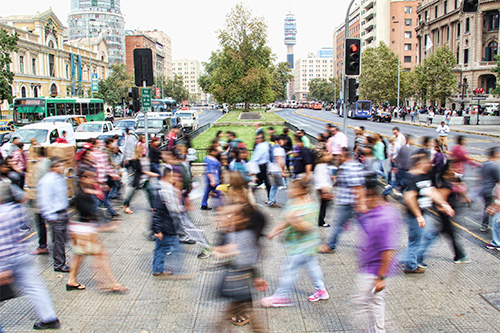
Project leads: Afra Mashhadi, Assistant Professor, Computer Software and Systems, University of Washington, Bothell, and Ekin Ugurel, Ph.D. Candidate, College of Engineering, University of Washington. Data scientist: Bernease Herman, eScience Institute, University of Washington. DSSG fellows: Apoorva Sheera, Jiaqi He, Manurag Khullar, Sakshi Charvan. Generative crowd-flow (CF) models are machine learning models that are capable of producing mobility…
-
UW DSSG: 2024 Summer Program

The eScience Institute recently spoke with six Student Fellows from the Data Science for Social Good program, now in its 10th year at the University of Washington’s Seattle campus. In-depth project descriptions are available on the UW DSSG projects page. The Seattle summer is in full effect. People are taking advantage of the extended daylight…
-
Analyzing Groundwater Insecurities in the Colorado River Basin

By: Louisa Gaylord Groundwater is a vital source of water for a large part of the United States; it’s used for drinking and irrigation, keeps wells and springs filled, and generally contains fewer contaminants than surface water. Declines in groundwater levels are a growing problem in recent years, resulting in lakes and reservoir levels dropping,…
-
Using Data Science to Examine Heat Pump Feasibility Across Alaska
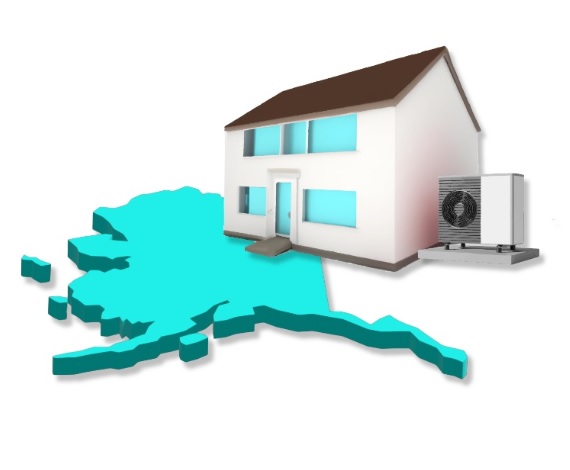
By: Louisa Gaylord 2023 is on track to be one of the hottest years across the globe. Warming occurs at double the global rate in Arctic regions, necessitating the need for viable decarbonization options that help move away from dependence on fossil fuels. This summer, one of UW Data Science for Social Good (DSSG) teams…
-
2023 DSSG Student Fellows Reflect on Their Experiences

Since its inception in 2015, the Data Science for Social Good (DSSG) program at the University of Washington has convened interdisciplinary teams of students, stakeholders, data scientists, and researchers for an immersive 10-week program in Seattle, WA. Historically, the program has leveraged data to engage with topics as diverse as intergenerational poverty, voting rights, and…
-
2022-23 “End of Year” Message from eScience Director Andy Connolly
We are ending another academic year at the eScience Institute, and we are celebrating themes that have been central to our mission for many years. In September 2022, we held the first “Learning and Doing Data for Good” conference, where researchers and participants from around the country came together to discuss how data can help…
-
Meet the DSSG 2023 Teams
The eScience Institute’s annual Data Science for Social Good (DSSG) program kicks off next week, and we are excited to host a new group of Student Fellows at the WRF Data Science Studio throughout the summer. 2023 marks the ninth year of DSSG, and two teams will spend the next ten weeks collaborating with our…
-
Generating regionally integrative datasets to understand groundwater insecurities in the Colorado River Basin
Project leads: Akshay Mehra, Assistant Professor of UW Earth and Space Sciences, and Sameer Shah, Assistant Professor of UW Environmental and Forest Sciences Data scientist: Vaughn Iverson DSSG fellows: Yuanning Huang, Kimberly Kreiss, Maia Powell, and Aanchal Setia. The Colorado River Basin (CRB) is experiencing unprecedented water scarcity. Arguably, the CRB is an epicenter of North American…
-
Heating Pumps in Alaska and Beyond

Project leads: Erin Trochim, Research Assistant Professor, Alaska Center for Energy and Power, University of Alaska Fairbanks Data scientist: Maddie Gaumer DSSG fellows: Aminat Adefolu, Silas Gifford, Katherine Grisanzio, and Brian Leung. Decarbonization, a pressing global issue, necessitates the transition from carbon-intensive power to net-zero sources. The Arctic is an area of particular concern, where warming occurs at…