Project Lead: Ai Phuong S. Tong, UW Medicine
Data Science Lead: Curtis Atkisson
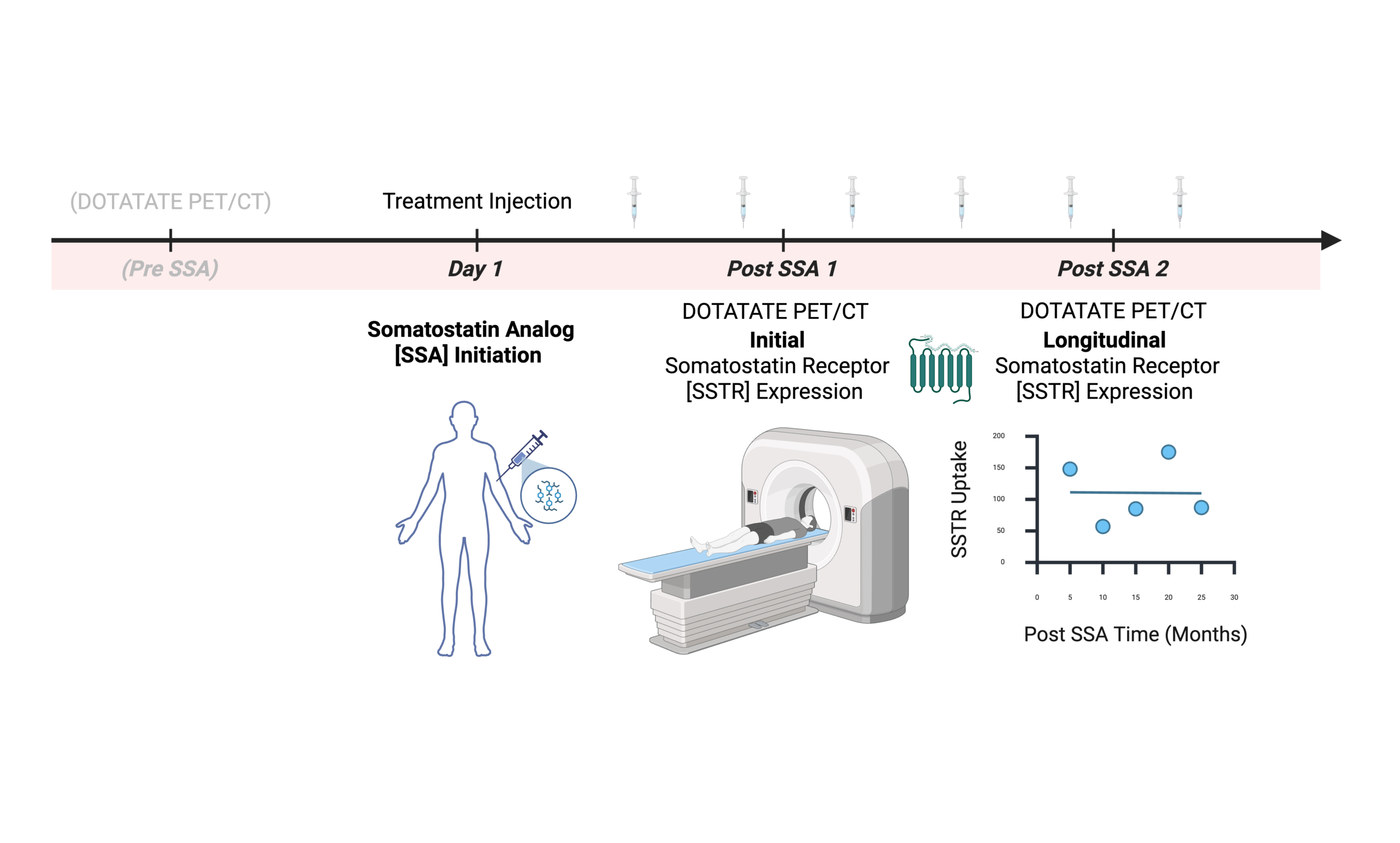
Our project explored how a specialized imaging technique called somatostatin receptor (SSTR) positron emission tomography (PET) changes over time in patients with neuroendocrine tumors, a type of slow-growing cancer that often affects the gastrointestinal system. These scans help doctors visualize tumors by detecting specific receptors on cancer cells. Many patients receive long-acting somatostatin analog (SSA) medications as part of their treatment, but it has remained unclear how these drugs influence imaging results over months to years. Understanding this is important. Clinicians often rely on these scans to assess whether tumors are stable or changing. We analyzed imaging data from patients who underwent multiple PET scans after starting SSA therapy. By comparing early and later scans, we evaluated how tracer uptake, a measure of how strongly tumors and normal tissues appear on imaging, evolves over time. We found that while uptake in normal organs such as the liver and spleen remained largely stable, tumor uptake showed a tendency to increase with longer duration of therapy. This suggests that changes seen on scans may not always reflect tumor growth. It could instead represent biological shifts in how tumors express certain receptors.
Through this project, we gained valuable experience working with longitudinal clinical imaging data and applying statistical methods to understand trends over time. We also learned how important it is to carefully control for technical and clinical variables, such as imaging timing and treatment consistency, when interpreting multimodal medical data. These insights highlight the challenges of distinguishing true disease progression
from treatment-related imaging effects.
Our findings have the potential to improve how clinicians interpret PET scans in patients receiving SSA therapy, helping avoid misinterpretation and supporting better-informed treatment decisions. More broadly, this project demonstrates how combining clinical expertise with data science approaches can uncover subtle but meaningful patterns in medical data. This ultimately contributes to more precise and personalized care.