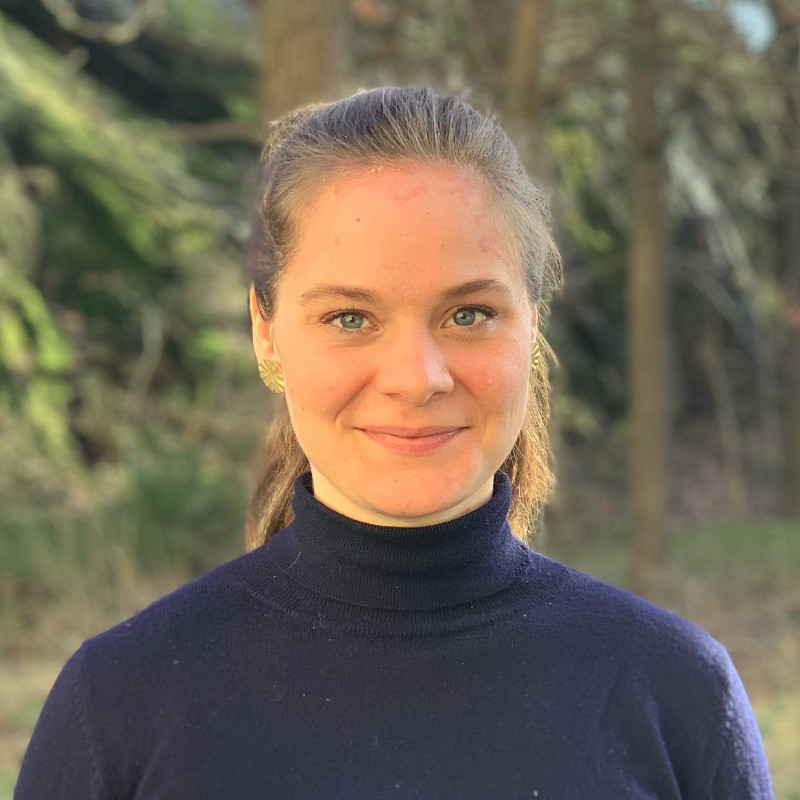
Please join us for a UW Data Science Seminar featuring UW Chemistry Postdoctoral Researcher Amke Nimmrich on Thursday, January 8th from 4:30 to 5:20 p.m. PT. The seminar will be held in IEB G109.
“Creating a code base for on- and offline analysis of ultrafast X-ray spectroscopy data recorded at the chemRIXS instrument”
Abstract: X-ray Free Electron Lasers are large scale facilities providing ultrashort pulses of X-ray light at high repetition rates. These light pulses can be used to observe reaction dynamics in real time (femto- to picoseconds (10⁻¹⁵ to 10⁻¹² s)) by taking snapshots after starting a light-induced reaction with a laser pulse. The chemRIXS instrument at LCLS specifically is used to measure the electronic structure around specific atoms through time-resolved X-ray spectroscopies, giving unprecedented insights into the coupled nuclear and electronic dynamics throughout chemical reactions. The nature of XFEL experiments however leads to recording of vast amounts of data in a very short time. Additionally, the limited time for experiments at these large-scale facilities requires immediate analysis of the incoming data to ensure a successful experiment.
To tackle the computational challenge of the real-time analysis of these data sets the goal of this project was to create a robust code base for a data analysis pipeline at the chemRIXS instrument with guidance from eScience scientist Bryna Hazelton. In this talk, I will present the progress we made in creating this code base, the functionality we achieved and further tasks that will need to be addressed.
Speaker Bio: After receiving a BSc (2016) and MSc (2018) in Business Chemistry at Kiel University, Germany, Amke Nimmrich moved to Sweden to pursue a PhD in Physical Chemistry at the University of Gothenburg. Following her PhD research on time-resolved X-ray solution scattering which included an external stay at the Technical University of Denmark, Amke joined the group of Prof. Munira Khalil at the University of Washington in 2023 working on X-ray spectroscopies. In 2024 she received the Wenner-Gren Postdoctoral Fellowship to continue and expand her work with Prof. Khalil.