
Project Leads: Hannah Fenelon, Peter Rabinowitz, Erica Fuhrmeister, Clare Burbick, and Vickie Ramirez, Center for One Health Research
Data Science Lead: Curtis Atkisson
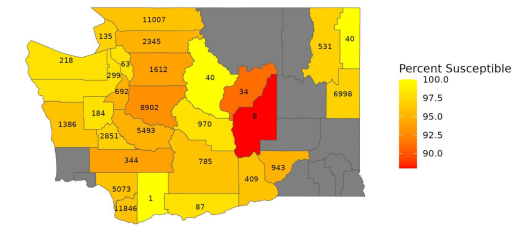
Washington Integrated Surveillance for Antimicrobial Resistance Database (WISAR) contains over one million isolates with antimicrobial susceptibility results. These isolates are from samples from humans, animals, and the environment throughout Washington and in surrounding states and regions. The data are collected for primarily clinical purposes for human and animal isolates from various different laboratories and sources and are transferred to WISAR for use in research and surveillance purposes. This project will focus on imputing missing (calculating likely values and possibilities for values) data for these isolates to allow the data to be analyzed and compared appropriately across sources and sectors. Currently, data may not be tested for the same antimicrobials depending on the laboratory and sector from which the samples come because human medicine, veterinary medicine, and environmental sampling have different antibiotics of interest and availability clinically. This work will further the ability of our team to compare data across sectors conducted more advanced surveillance and analyses utilizing these methods.